
Patrick J. Parsons, PhD
Dr. Parsons has been investigating how different trace elements can affect human health for more than 40 years. The goal of this research is to provide better insights into what is now called the “exposome”. The CDC, defines the exposome as “the measure of all the exposures of an individual in a lifetime and how those exposures relate to health.” Each person has a unique exposome, which begins with the prenatal life stage, and continues through other life stages with exposures from the environment, diet, lifestyle, etc. These exposures interact with our own unique genetics and physiology. Understanding how trace elements may impact the exposome is important. This includes the nutritional role of the essential trace elements, for example Copper (Cu), Selenium (Se) and Zinc (Zn), to assessing exposure to toxic metals such as Lead (Pb), Cadmium (Cd), and Mercury (Hg), and toxic metalloids such as Arsenic (As).
To support such studies, Dr. Parsons’ laboratory develops new methodologies to measure internal dose and external exposures. To assess exposure requires specialized techniques for measuring trace elements at extremely low levels in human tissues and body fluids, as well as in food and environmental matrices. These techniques require access to state-of-the-art facilities and instrumentation based on atomic spectrometry.
From the air we breathe, to the water we drink, the food that we eat, and even the types of consumer products we use, toxic metals get into our bodies and can affect every organ and system. According to the CDC, “Biomonitoring measurements are the most health-relevant assessments of exposure because they measure the amount of the chemical that actually gets into people from all environmental sources (e.g., air, soil, water, dust, or food) combined.” Dr. Parsons’ laboratory at Wadsworth is among the leading centers for human biomonitoring of trace elements, and is supported with external funding from both the NIH and the CDC.
The laboratory develops and validates advanced methods for biomonitoring based on inorganic mass spectrometry. Trace element analysis at the µg/L to ng/L range is carried using Inductively Coupled Plasma – Mass Spectrometry (ICP-MS). For this ultra-low level work, 3 Class 100 (ISO 5) clean rooms are used to ensure contamination is minimized. The laboratory is very well-equipped with 12 ICP-MS instruments including:
- 5 ICP-MS/MS: 3 Agilent 8800/8900 and 2 Thermo iCAP-TQ
- 6 Q-ICP- MS: 2 Perkin Elmer NexION, 1 Perkin Elmer DRC II, and 3 Thermo XSeries II instruments, each having either collision cell (CC) and/or dynamic reaction cell (DRC) technology.
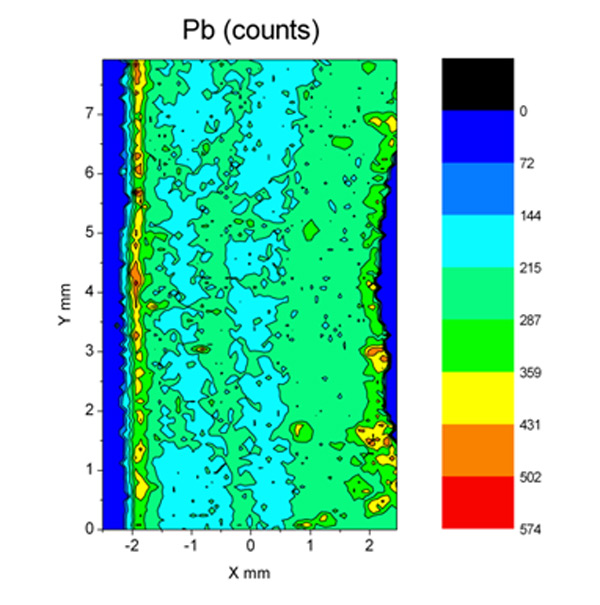
- 1 High Resolution-ICP-MS: Thermo Element 2 Sector Field, used for isotope ratio measurements and is coupled with a New Wave UP-213 Laser Ablation (LA-) system for spatial analysis and elemental imaging studies.
Speciation methods can provide a more detailed picture of how some trace elements behave. The laboratory can analyze human urine for arsenic species by coupling Liquid Chromatography (LC) to ICP-MS, and is currently working with FDA funding to develop a harmonized method for arsenic speciation in food matrices.
Much of Dr. Parsons’ research has focused on lead poisoning prevention and improving measurements of children’s blood lead levels. In his capacity as director of the lead poisoning laboratory at Wadsworth, he has served on numerous national committees, including membership of CDC’s Advisory Committee on Childhood Lead Poisoning, and chairs the Clinical Laboratory Standards Institute (CLSI) document development committee on “ Measurement Procedures for the Determination of Lead in Whole Blood” C40. In collaboration with the US National Institute of Standards and Technology (NIST), his laboratory produced Standard Reference Material (SRM) 955c Toxic Metals in Caprine Blood, and helped certify NIST SRM 955d Toxic Metals in Frozen Human Blood. In 2018, Dr. Parsons received the Gold Standard Award for Public Health Laboratory Excellence from the Association of Public Health Laboratories (APHL).
With external funding from NIEHS, Dr. Parsons produced well-characterized bone reference materials certified for lead content that are used to validate techniques based on GFAAS and ICP-MS, as well as K-shell X-ray fluorescence (XRF) spectrometry that is used for non-invasive, in vivo bone lead measurements. The Parsons’ laboratory has had a long-term collaboration with X-Ray Optical Systems (XOS, East Greenbush) to develop new field-based instrumentation based on monochromatic X-ray fluorescence (XRF) spectrometry. In one project supported by NIEHS, environmental exposures to Pb, As, and Hg in food, consumer products and traditional medications were assessed among ethnic Chinese living in upstate NY. Dr. Parsons has also studied the role of trace elements in patients receiving Parenteral Nutrition (PN) at home, with recent work funded by the Oley Foundation. Two of Dr. Parsons’ former PhD students received the Oley Foundation’s Home PN Research Prize.
Other ongoing research projects involve collaborations with investigators at Syracuse University, SUNY Oswego, SUNY Buffalo, SUNY Albany, University of Rochester, Boston University, and the University of Kentucky. The Parsons’ lab has a long standing collaboration and student exchange program with the trace elements group at the Universidade de São Paulo – Ribeirão Preto, Brasil. In addition to externally funded research studies, the laboratory also operates a Biomonitoring Proficiency Testing Program for Trace Elements. Well-characterized blood, serum and urine reference materials are developed and certified for trace element content, and are used in the NIH Human Health Analytical Exposure Resource Network (HHEAR).
To learn more, please visit the Parsons Laboratory.