Skip header information|
Wadsworth Center Home - Science in the Pursuit of Health|
Main Body

Investigators and Program Directors

Keith M. Derbyshire

Keith M. Derbyshire

Research Scientist, Wadsworth Center,
Molecular Genetics

Professor, School of Public Health, Biomedical Sciences

Ph.D., Edinburgh University (1983)
Postdoctoral training, Yale University

E-mail: keith.derbyshire@wadsworth.org

Research Interests

Our laboratory's interests are in the molecular genetic analysis of horizontal gene transfer with a focus on conjugation and transposition in Mycobacteria. We have described DNA transfer between cells in the model Mycobacterium Mycobacterium smegmatis. All of our results to date indicate that genetic exchange occurs by a conjugation-like process, but that the mechanism of DNA transfer is quite different from the prototypical plasmid systems studied in other organisms. The long-term goals of our research are to characterize this transfer process at the genetic and biochemical levels in order to determine the mechanism of transfer, to optimize gene transfer and to develop methods for the construction, mutagenesis and manipulation of mycobacteria, including the slow-growing pathogen Mycobacterium tuberculosis.

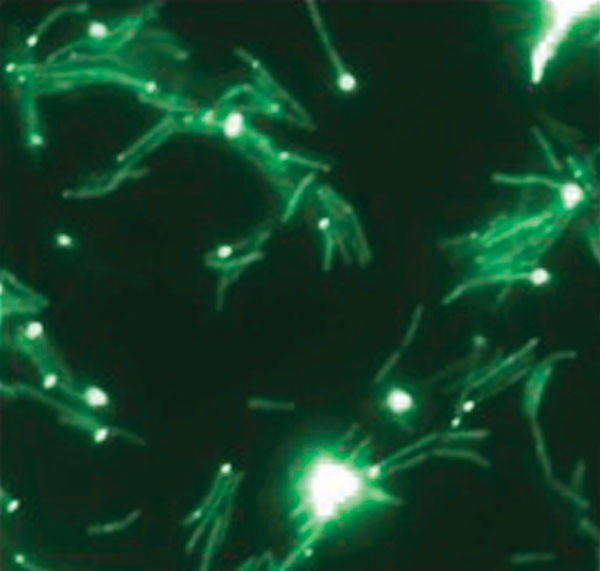
Transposon mutagenesis was used to isolate transfer mutants of M. smegmatis and the mapping of transfer-defective insertions led to the surprising discovery that the M. tuberculosis virulence locus, esx-1, is conserved and functional in M. smegmatis and is essential for DNA transfer. The M. tuberculosis ESX-1 secretory apparatus is responsible for secreting at least two proteins, EsxA and EsxB; mutants defective in EsxAB secretion are attenuated. Our studies have shown that secretion of EsxAB orthologues in M. smegmatis is essential for recipient activity. This novel discovery places the laboratory in a unique position to exploit DNA transfer as a genetic tool to characterize the ESX-1 secretory apparatus, and define its roles in both DNA transfer and virulence. Future research is directed towards the further characterization of ESX-1 using molecular genetic approaches to identify genes necessary for ESX-1 and transfer functions. The genetic approaches include mutagenesis (transposon, site-directed and targeted allele replacement), two-hybrid screens, dominant-negative screens, construction of reporter genes and microarray studies to monitor gene expression. We have also used whole genome sequencing approaches to determine genetic differences between donor, recipient and transconjugant cells. These genetic approaches will be combined with biochemical methods such as protein purification, cellular fractionation, Western analyses, immuno-precipitation and fluorescent microscopy studies to determine the structure and cellular location of the macromolecular protein complexes necessary for both DNA transfer and ESX-1 activity.

>> Select Publications

Contact Information

Phone 518-473-6079
Fax 518-486-7971
E-mail: keith.derbyshire@wadsworth.org