
Research Projects

Climate and Mosquito-Borne Virus Transmission
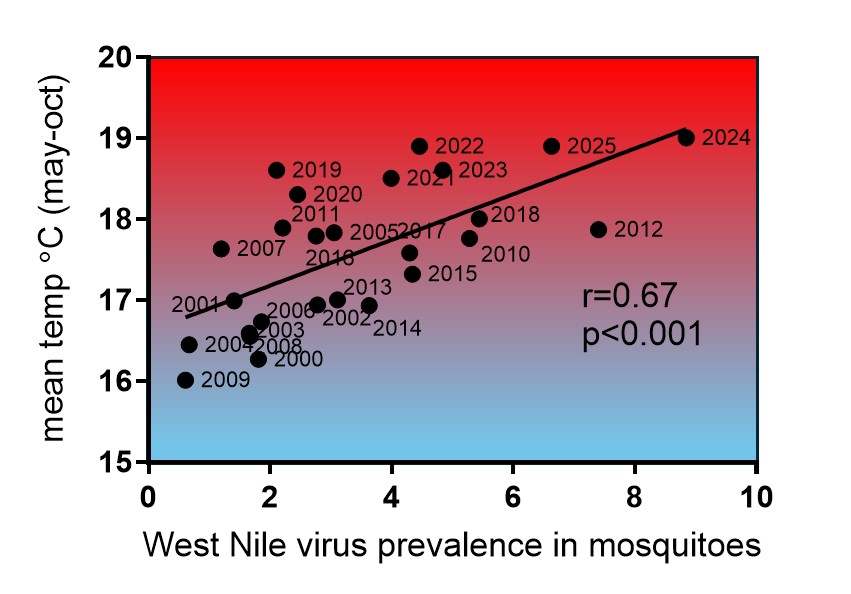
Figure 1. Increased mean temperatures during transmission season are directly correlated to increases in West Nile virus activity in New York State. The arbovirus laboratory estimates prevalence (# positive/1000 mosquitoes) based on their annual statewide surveillance testing program.
We are investigating how climate shapes West Nile virus (WNV) transmission utilizing both data from our surveillance testing program and empirical data generated in the laboratory with Culex mosquitoes. In addition to vector competence (the intrinsic capacity of a vector to become infected with and transmit a pathogen), we assess traits that influence virus spread (mosquito development, blood feeding frequency, longevity) at a range of temperature and humidity conditions using geographically distinct populations of mosquitoes.
We work with internal and external collaborators to incorporate our experimental data into predictive models in order to improve our capacity to understand how climate variation influences virus transmission. We also examine how temperature drives virus evolution and mosquito adaptation by characterizing the genomic history of WNV, evaluating distinct historic isolates under unique environmental conditions, and simulating mosquito and virus evolution in the lab.
Our established reverse genetics system allows us to engineer specific mutations of interest into WNV to probe the mechanistic basis of viral fitness and transmission. These findings help us integrate system evolution with future climate scenarios to better understand the trajectory of arbovirus evolution and transmission in a warming world.
Characterization and Genomic Surveillance of Powassan virus
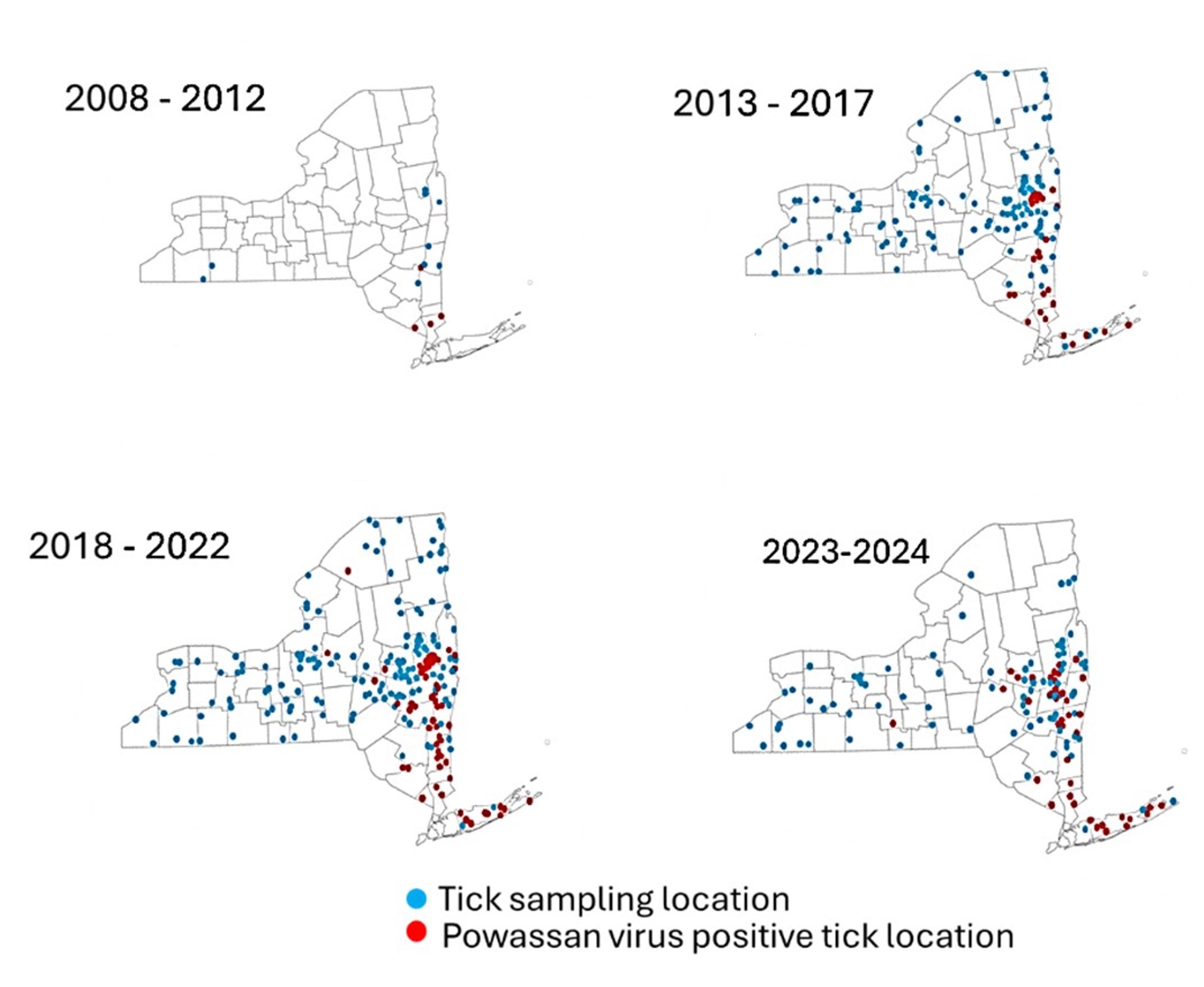
Figure 2. Increased prevalence and geographic distribution of Powassan virus in New York State.
Powassan virus (POWV) is a growing tick-borne virus threat in New York State (Figure 2). In collaboration with the NYS Bureau of Communicable Disease Control and partners at the University of Minnesota we’re assessing the distribution and genetic structure of POWV and Ixodes scapularis (black-legged/deer tick) through tick surveillance, deer serology, and genetic analyses in both states. In the lab, we are evaluating how viral genotype and tick population interact to drive local adaptation and variability in transmission by testing genetically distinct POWV isolates in distinct field populations of ticks. By using cell culture systems, infection in canonical and noncanonical vectors, and data from host model infections, we can assess how virus strain influences risks associated with range expansion and disease spillover. Like WNV, we have an established POWV reverse genetics system to study the role of specific genetic signatures. Together, these studies provide further insights into the factors driving POWV emergence.
Neglected Orthobunyavirus: Jamestown Canyon Virus and Cache Valley Virus
Orthobunyaviruses are among the most diverse and prevalent genera of arboviruses globally. Despite a long history in the U.S. and increasing recognition as important human pathogens, the orthobunyaviruses Cache Valley virus (CVV) and Jamestown Canyon virus (JCV) remain understudied. We are investigating the influence of virus ecology and evolution in the emergence of these neglected pathogens.
Characterizing Newly Emergent Tick-Borne Viruses in New York State
We have recently identified two novel tick-borne pathogens in NYS, Heartland virus (HRTV) and Bourbon virus (BRBV). Both viruses are transmitted by the Lone star tick (Amblyomma americanum), a vector which is currently spreading in the Northeast U.S. We are employing enhanced surveillance and extensive genetic and phenotypic characterization to better define the threat from these viruses.